Mitochondrial mutation dynamics
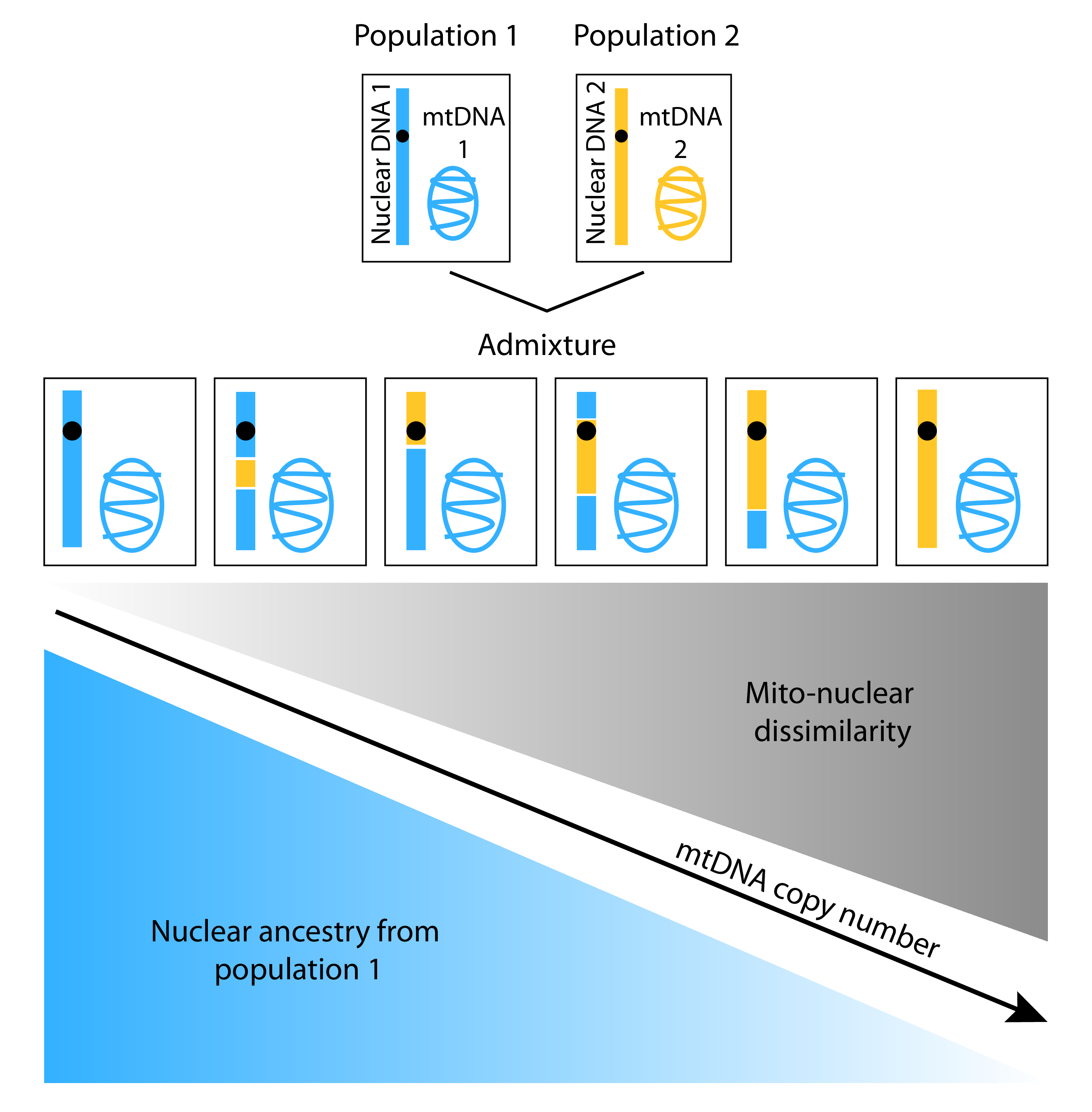
Credit: Arslan Zaidi
With sequencing now possible at high depth, we aim to examine mutation process directly, by examining the DNA of children and their parents. Mitochondrial DNA (mtDNA) provides a good starting point for such an investigation due to its compact size and high mutation rate. We have established an experimental and computational pipeline to study mtDNA mutations and heteroplasmy frequency shifts (Goto et al. 2011), therefore we are in great position to study the patterns and rates of mtDNA mutations at unprecedented detail. Our recent study suggested that mitochondrial DNA undergoes through a very small bottleneck during oogenesis and that the number of heteroplasmies in the offspring increases with maternal age at fertilization (Rebolledo Jaramillo, Su, et al. 2014). Collaborators: Anton Nekrutenko, Francesca Chiaromonte, Rasmus Nielsen (Figure : Afgan et al. 2011).
Collaborators
 Barbara Arbeithuber
Postdoctoral scholar
Barbara Arbeithuber
Postdoctoral scholar
 Francisco J. Diaz
 Marzia Cremona
Visiting Research Professor
Marzia Cremona
Visiting Research Professor
Press Releases
In brief: Certain age-related DNA mutations are less common in human eggs
UNIVERSITY PARK, Pa. — Unlike other tissues in the human body, human eggs don’t pick up as many mutations in some of their DNA as they age. The findings from a new study, published in Science Advances and led by researchers at Penn State, suggests that human eggs — the reproductive cells that, when…
Are egg cells in aging primates protected from mutations?
New mutations occur at increasing rates in the mitochondrial genomes of developing egg cells in aging rhesus monkeys, but the increases appear to plateau at a certain age and are not as large as those seen in non-reproductive cells, like muscle and liver. A new study using incredibly accurate DNA sequencing methodology suggests that there may be a protective mechanism that keeps the mutation rate in reproductive cells relatively lower compared to other tissues in primates, a fact that could be related to the primate—and therefore human—propensity to reproduce at later ages.
New mutations accumulate in reproductive cells of older mice
Older mice have more new mutations – changes in DNA sequence that occur in the individual rather than being inherited from a parent – than younger mice in the genomes of their mitochondria, according to researchers at Penn State. The findings could have implications in humans because mutations in the mitochondrial genome are associated with multiple human genetic diseases and these new mutations can be passed to the next generation by mothers who often have children at older ages in modern societies.