Congratulations to Saswat Mohanty for winning the the 2026-27 Alumni Association Graduate Fellowship
Congratulations to Saswat Mohanty for winning the the 2026-27 Alumni Association Graduate Fellowship!

Obesity is becoming the major epidemic of the 21st century, and we are studying this disease in an integrated way - from the perspective of genomics, microbiomics, and epigenomics. …

With sequencing now possible at high depth, we aim to examine mutation process directly, by examining the DNA of children and their parents. Mitochondrial DNA (mtDNA) provides a …
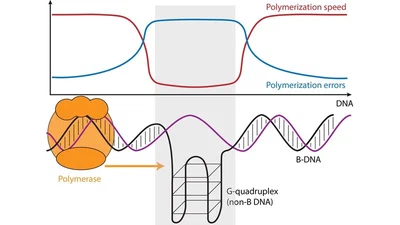
Approximately 13% of the genome can fold into DNA structures different from the B-form double-helix discovered by Watson and Crick. Such "non-B DNA" structures include cruciforms, …

Mutation rates vary at a fine scale - even within individual chromosomes. We are using statistical modeling to study such regional variation in mutation rates. Moreover, we are …

We are determining the gene repertoire and structure of the Y chromosome in several mammalian species. The Y chromosome has very high rates of mutation compared with other …
Congratulations to Saswat Mohanty for winning the the 2026-27 Alumni Association Graduate Fellowship!
Congratulations to Kateryna on her interview with Roxanne Khamsi in a new book Beyond Inheritance. You can read the interview here.
Congratulations to Saswat Mohanty for winning the Jeanette Ritter Mohnkern Graduate Student Scholarship in Biology!
Congratulations to Huiqing Zeng for winning the Biology 2025 Research Staff Excellence Award!
Congratulations to Wilfried Guiblet on his successful PhD defense
UNIVERSITY PARK, Pa. — Unlike other tissues in the human body, human eggs don’t pick up as many mutations in some of their DNA as they age. The findings from a new study, published in Science Advances and led by researchers at Penn State, suggests that human eggs — the reproductive cells that, when…
UNIVERSITY PARK, Pa. — Certain DNA sequences can form structures other than the canonical double helix. These alternative DNA conformations — referred to as non-B DNA — have been implicated as regulators of cellular processes and of genome evolution, but their DNA tends to be repetitive, which…
UNIVERSITY PARK, Pa. — Differences among the DNA of seven ape species — including humans — are greater than originally thought, according to an international team led by researchers at Penn State, the National Human Genome Research Institute (NHGRI) and the University of Washington. They revealed…
Newly generated, complete “end-to-end” reference genomes for the sex chromosomes of five great ape species and one lesser ape species — produced by an international collaborative team led by researchers at Penn State, the National Human Genome Research Institute and the University of Washington —…
Listen to the Science Friday podcast where Adam Phillippy and Kateryna Makova discuss the challenges of sequencing the Y chromosome, and what doing so might mean for medical research. UNIVERSITY PARK, Pa. — The first full sequence of the last human chromosome — the Y chromosome — to be assembled is…

Professor
Department of Biology
Kateryna is interested in genomics, evolution, and human genetics. Her lab studies mutations using both computational and experimental approaches. Additional topics of interest include sex chromosome evolution and genomics of childhood obesity.

Postdoctoral Scholar
Currently, Byung June focuses on telomere-to-telomere genome assembly and the functional research of chromatin's complex structure, particularly in sex chromosomes. Prior to bioinformatics, Byung June majored in conservation genetics, focusing on identifying the genetic diversity and structure of the leopard cat in the South Korea during his M.S. course, supervised by Prof. Soo Hyung Eo. This research sparked his interest in bioinformatics and genome functionality, leading to his false gene gain research collaboration with the Vertebrate Genomes Project during his Ph.D. course at Seoul National University, supervised by Prof. Heebal Kim. Outside of science, Byung June enjoyed playing bass and electric guitar and now enjoys weight lifting and walking in peaceful towns.

Ph.D. Student
Saswat is interested in understanding the evolution of non-B-DNA structures in primates. Currently, he is working mainly on a specific type of non-B-DNA structure called the G-quadruplex or G4, for example, developing bioinformatic tools to analyze genome-wide distribution of these structures.

Postdoctoral Scholar
Karol has a Computer Science background but also enjoys the biological aspect of his work. He did his PhD in Oncology analyzing clonal evolution in leukemias. Currently he is focusing on a more standard type of evolution, that of the primate sex chromosomes. He enjoys creating interactive visual representations of his findings. Outside of the lab Karol likes playing music and scuba diving.

Researcher
Before joining Makova Lab, Hana worked for six years in the field of molecular genetic characterization of pediatric solid tumors and hereditary diseases in Prof. Slaby’s research group at CEITEC, Masaryk University, Brno, Czechia. She got familiar with the interpretation of next generation sequencing data (mainly WES, RNA seq) and a spectrum of molecular genetic methods. She collaborated on several publications and grant projects. In Makova Lab she is responsible for cell cultivation, performing molecular biology methods, and has recently started a new project focusing on the study of telomeres in macaques. Apart from work, she enjoys spending time with her husband and 3 year-old son.

Postdoctoral Scholar
Jacob's current research in Makova Lab uses a combination of experimental and computational approaches to characterize the role of non-canonical DNA secondary structures in primate genomes. Before joining Makova Lab, Jacob studied RNA biochemistry. His Ph.D. thesis work with Dr. Philip Bevilacqua updated thermodynamic models that describe RNA secondary structures to better reflect the cellular environment. His undergraduate thesis work focused on drug targeting RNA thermometers in bacteria.

Ph.D. Student
Johanna has a background in microbiology and computational biology, with a strong interest in the study of evolution. She currently works on the evolution of sex chromosomes across primates. Although skilled in both wet and dry lab work, she is more drawn to the computational side of research. Her long term interests lie in bioinformatics and evolutionary biology, including RNA-seq, genomic diversity, and population structure, driven by a continued interest in bringing computational approaches to biological questions. Outside the lab, she enjoys biking, traveling, and crafts.

Research Technologist
Huiqing's current interest in Makova Lab is using new technologies, such as ddPCR, next generation sequencing, etc., to study genomics and human genetics. Before joining Makova Lab, she studied signaling pathway in mouse embryonic development.

Administrative Assistant
Hui obtained her M.S. in Biology from McMaster University, Canada, in the year of 2013. After living in Canada for 4 years, she moved to US and settled down in State College along with her family. She joined Makova Lab as an administrative assistant in 2024. Apart from her work, Hui likes cooking, karate, excercise, or watching animal documentaries.

Department of Biochemistry and Molecular Biology, Huck Institutes of the Life Sciences, Penn State University
Department of Biochemistry and Molecular Biology, Huck Institutes of the Life Sciences, Penn State University
Prof. Carrel focuses on genetic, epigenetic, and genomic regulation of expression on the mammalian X chromosome.

Pennsylvania State University
Pennsylvania State University
Francesca is a statistician developing methods for the analysis of large, high-dimensional and complex data, and applying such methods in contemporary “Omics” sciences and other scientific fields – including Meteorology and Economics.

Postdoctoral scholar
University Clinic of Gynaecology, Obstetrics and Gynaecological Endocrinology, Johannes Kepler University Linz, Austria
In Prof. Makova's lab Barbara was interested in the accurate measurement of rare mutations. Her project was focused on the inheritance of mitochondrial DNA; particularly, analysis of de novo mutations in the germ line, as well as the inheritance of low-level variants.

Visiting Research Professor
Université Laval, Canada
Marzia develops statistical techniques for the analysis of large, high-dimensional and complex data – in particular functional data. An important aspect of her research is its collaborative and multidisciplinary nature. Indeed, much of her work is at the interface between statistics and computational biology, and her main application area is in the “Omics” sciences.

Department of Electrical Engineering and Computer Science, Florida Atlantic University
Department of Electrical Engineering and Computer Science, Florida Atlantic University
Michael leads a data science research group focusing on the development and application of statistical and machine learning techniques in genomics.

Pennsylvania State University
Pennsylvania State University
Francisco's research focuses on understanding the molecular and functional interactions between oocytes and granulosa cells that promote production of a fertile oocyte. This knowledge can then be used to (1) develop better therapeutic interventions for infertility or species preservation and (2) develop better reproductive management tools for animal agriculture.

Department of Pathology and Laboratory Medicine and Department of Biochemistry and Molecular Biology
Department of Pathology and Laboratory Medicine and Department of Biochemistry and Molecular Biology
Prof. Eckert is focused on mechanisms of human cell mutagenesis and repetitive DNA replication in relation to genome evolution.

Department of Genome Sciences, University of Washington
Department of Genome Sciences, University of Washington
Prof. Eichler's research is focused on understanding the evolution, pathology and mechanism(s) of recent gene duplication and DNA transposition within the human genome. His work involves the systematic discovery of these regions, the development of methods to assess their variation, the detection of signatures of rapid gene evolution and ultimately the correlation of this genetic variation with phenotypic differences within and between species.

University of Cambridge
University of Cambridge
Malcolm Ferguson-Smith's significant contributions to human genetics and cytogenetics range from early studies applying the sex chromatin method to the analysis and frequency of intersexual states, and to genome mapping using chromosome rearrangements. Malcolm was the first to report the now familiar phenomenon of satellite association, the 48 XXXY karyotype, the specificity of location of secondary constrictions in the human chromosome set and gene location by in situ hybridization.

Biology department of The Pennsylvania State University
Biology department of The Pennsylvania State University
Christian is an Assistant Professor in the Biology department of The Pennsylvania State University. He is interested in quantifying positive and negative natural selection in the genome. Currently he's been working on methods for inferring demographic history and genetic adaptation from ancient DNA.

Genome Informatics Section at the National Human Genome Research Institute
Genome Informatics Section at the National Human Genome Research Institute
Dr. Adam Phillippy is a Senior Investigator and head of the Genome Informatics Section at the National Human Genome Research Institute. His lab develops and applies computational methods for the analysis of massive genomics datasets, focusing on the challenges of genome sequencing and comparative genomics. He is a pioneer of single-molecule sequencing for the reconstruction of complete genomes and is best known for his work on completing the human genome from “telomere to telomere”.

Department of Biology, Institute for Computational and Data Sciences, Penn State University
Department of Biology, Institute for Computational and Data Sciences, Penn State University
Zachary works at the interface of population genetics and evolutionary genomics. His work has relevance to a number of fields including medical genetics, anthropology, and conservation genetics.

Pennsylvania State University
Pennsylvania State University
Dr. Holland is a Fellow in the American Academy of Forensic Sciences, and has served as an associate professorial lecturer and adjunct faculty member at various colleges and universities. Dr. Holland has been on the Editorial Board of the Journal of Forensic Sciences and a member of the Advisory Board of the International Journal of Legal Medicine. He has held positions on governmental and company advisory boards and has been recognized by the FBI and others for his work. Dr. Holland has had extensive experience with human remains identification cases, including the identification of victims from the World Trade Center disasters and from numerous commercial airline accidents. His rearch group is focused on advancing forensic DNA applications, especially in the area of forensic mitochondrial (mt) DNA analysis.

Yifei is an Assistant Professor in the Biology Department and the Huck Institutes at the Pennsylvania State University. He is interested in developing novel machine learning models to study how natural selection shapes the distribution of human genomic variation and the architectures of genetic diseases.

Pennsylvania State University
Pennsylvania State University
Paul Medvedev is a Professor in the Department of Computer Science and Engineering and the Department of Biochemistry and Molecular Biology and the Director of the Center for Computational Biology and Bioinformatics at the Pennsylvania State University. His research is focused on developing computer science techniques for analysis of biological data and on answering fundamental biological questions using such methods.

Pennsylvania State University
Pennsylvania State University
Prof. Nekrutenko performed postdoctoral work at the University of Chicago where he found his interest in computational genomics. After moving to the Pennsylvania State University as an Assistant Professor, he and his collaborators developed the Galaxy platform for analysis of biological data. He is now a professor of biochemistry and molecular biology and founding member of galaxyproject.org.

Department of Integrative Biology and the Department of Statistics, University of California at Berkeley
Department of Integrative Biology and the Department of Statistics, University of California at Berkeley
Rasmus focuses on the development and application of statistical and computational methods for analyzing genomic data in the context of evolutionary genetics, population genetics, and medical genetics.

Penn State College of Medicine
Penn State College of Medicine
Ian Paul, MD, MSc, graduated from Penn State College of Medicine and completed his residency training at Duke University Medical Center in Durham, N.C. In addition to his responsibilities as a general pediatrician at Penn State Pediatrics and in the newborn nursery, Dr. Paul spends much of his time working on a variety of research projects and clinical trials that seek to improve health care for children and their families. His current research includes studies to prevent obesity and help breastfeeding newborns.

Department of Statistics, Pennsylvania State University
Department of Statistics, Pennsylvania State University
Matthew's research interests include functional data analysis, longitudinal data analysis, and data privacy with applications to Omics data.

Zoological Society of San Diego
Zoological Society of San Diego
Dr. Oliver Ryder serves San Diego Zoo Wildlife Alliance as the Kleberg Endowed Director of Conservation Genetics. He oversees research activities in the areas of molecular genetics, genomic studies, and genetic rescue efforts, including stem cell applications – all focused on reducing extinction risk and contributing to species recovery and sustainable populations. He guides the strategic development of efforts to develop and expand a global network of cryobanking facilities, especially for viable tissue culture cells.
310 Wartik Lab
University Park, Pennsylvania 16802
United States


